Sum of All Numbers in the Interval
Edited by Charles
Easy · Python · Array
Problem
Question:
Given an array of integers, calculate the sum of numbers in the input interval.
The input and output sample:
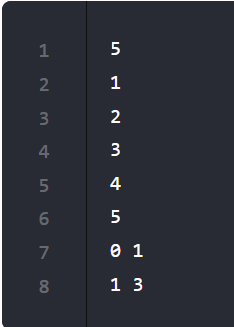

The first row is the length of the integer array, n. The following n rows are elements of the array. Then, the interval start and end indices in the array are given. For example, (0, 1) → [1, 2] → 3; (1, 3) → [2, 3, 4] → 9.
Explanation, examples & other approaches
Core idea
Given an array of integers, calculate the sum of numbers in the input interval.
The problem statement is available in the Problem block above.
Study record
| Field | Value |
|---|---|
| Attempts | 4 |
| Mastery | ❚❚❚❚ |
| The Latest Attempt | January 3, 2026 |
Python solution
import sys
import sys.stdin.read

def IntervalSum():
    # Input length of the array
    data = input().split()
    index = 0
    # Input elements of the array
    n = int(data[index])
    index += 1
    vec = []
    for i in range(n):
        vec.append(int(data[index + i]))

    # Input the intervals for calculation
    index += n

    presum = [0] * n
    temp = 0
    for i in range(n):
        temp += vec[i]
        presum[i] = temp

    results = []
    while index < len(data):
        start = int(data[index])
        end = int(data[index + 1])
        index += 2

        if start == 0:
            temp_sum = presum[end]
        else:
            temp_sum = presum[end] - presum[start - 1]

        results.append(temp_sum)

    for result in results:
        print(result)